Alpha Males: An Essay on Goat Philosophy

This somewhat rambling and not quite complete essay (1/x) explores the herd dynamics of goats and applies it to human notions of leadership and “Alpha” (males in particular). These musings, spurred by experience in the pasture, led me to examine human group dynamics and leadership in a different light.

The tendency to equate “alpha” with dominance or extroverted leadership obscures a more basic truth: alphas in nature, and in history, are not always the ones who speak the loudest or command from the front. They are the ones willing to take risks at the boundary, to remain aloof from the herd until danger calls them in. As societies grow larger and more complex, these primordial roles fracture into bureaucracies, ideologies, and symbolic politics. But selection pressures on sociobiological entities don’t just disappear because we define natural behavior as toxic masculinity, fascist ideology, or whatever. Our current hyperfixation on equality and our suspicion of deep masculinity all reflect an imbalance in how these roles are expressed today. The question is not whether leadership or protectorship is superior, but whether we can recognize their distinct functions — and recover a healthier balance between them.

Leadership vs Protectorship

In nature as well with humans (a subset of nature that is completely natural), leadership in herd animals manifests itself differently. That is, there are different types of leaders who inherit different leadership roles within the herd.

In wild horse, goat, and other herds, an alpha female consistently leads group movement to food and water. The rest of the females and the beta males generally stay with the herd and follow her lead.

In cattle, goats and other herd animals, some individuals are much quicker to approach humans, or novel objects. This is usually the alpha male, who seems to have instinctively inherited the job of checking potentially dangerous things out. Due to their ascribed curiosity, they become bolder and even more intelligent than the others who consistently hang back.

So, the alpha, who is generally the most physically dominant, does not necessarily lead the herd. He protects the herd – often from the rear or the exposed flank. Leadership in moving the herd falls to the one that others have learned to trust in finding food or avoiding danger.

Personality

Nature ascribes roles to individuals whose engagement in the world triggers behaviors – and vice versa. As is the case with almost all traits, the dna provides the initial parameters but experiences in the environment direct what gets activated, suppressed, and so on. And so, for humans as well as other animals, there are persistent personality traits that accompany the roles of leader and protector. Alpha females leaders, for example, tend to be bold, decisive, extrovert-like in movement and social cohesion. Alpha male protectors, on the other hand manifest different qualities: curiosity, risk-prone, quicker to fight than flight, and they are often less gregarious, taking on something like introvert-warrior role, staying at the margins rather than mingling. The other members of the herd might one day have to step up to become a leader or a protector. But until environmental triggers move them in this direction, they remain more passive and dependent on the leaders for cues. They also have their own distinct characteristics – as nature naturally hedges her bets – and in the same way that sex is distributed for the benefit of the herd (and population and species…) so too are other genetically given traits (i.e., some goats are from birth instinctively more cautious, while others seem to be born more curious, some are bigger and other are smaller). This makes sense within an evolutionary framework.

Leadership

We often think of alphas and leadership as being the same thing, but “even in nature” leadership is domain-specific.

The matriarch of the herd is usually not dominant in other contexts, such as interacting with potentially threatening beings and objects that are external to the herd. Her leadership is tied to the differentiated skills provided to her by nature and experience. These are usually tied to her knowledge and initiative, and not to physical dominance. Before being an alpha, she is a female – and her first job in the herd is to carry, deliver, and nurture babies. Even as the matriarch, her initiative is guided by a healthy form of risk aversion that, when possible, leaves the risk taking, interaction with external threats, and exploration of new places to the larger males on the perimeter – who have been genetically programmed to do just this.

The role of the alpha male is more about protecting the herd – at the perimeter. This makes him less concerned with the micro-decisions of the daily foraging of the herd. He seems to do his own thing. The matriarch may lead the herd back to water or to a familiar place. The other females, youngsters, and beta males generally follow her, but the alpha male does not. He hangs back and moves on when he feels like it. His biosocial role in the herd causes him to be more independent. He can afford to be aloof and independent because he can take care of himself better than anyone else in the herd. Moreover, the herd will not actually leave him too far behind, because they are feel like they need him – this instinct is programmed into their dna.

It makes sense that juveniles of both sexes follow the alpha female: they are still nursing, learning survival skills and the lay of the land, and the alpha female is the reliable risk-averse model that allows the rest to find some safety of the herd.

How this relates to humans

In personal observations of goats and in reading about other herd animals, I have noticed that female leaders guide foraging, daily movement, and cohesion while male leaders patrol boundaries, defend, and interact more directly with externals.

In humans, the same split often exists but in more complex form, especially in societies where there is a hyper division of labor. In more traditional, less atomized societies, women often historically oversaw domestic life, food distribution, care of the young, and the cohesion of kin groups. Men more often took roles of external defense, hunting, and conflict with outsiders.

The sociobiological leadership roles in herd animals are context-dependent and type-dependent. In humans, this division of roles has increasingly scaled up. Since the bronze age and likely earlier, the leader in realm of religion was not the same as the leader in war. Many seem to suppose that this difference signals a clear distinction between human culture and animal nature. But this view is mistaken. The division of labor in contemporary human societies is a catalyzed extension of leadership roles in herd animals (which is in turn an extension of division of labor amongst organs, cells, and so on).

In goats, the young ones are nurtured and learn how to survive by spending most of their time around females and risk-averse males – who in turn follow the alpha female. The same has almost always been true for humans: children largely learn subsistence, language, and culture from women (mothers, grandmothers, older sisters), while male models become more important in adolescence, as they become big and strong enough to engage in risky behaviors without threatening the survival of the herd itself. Adult males are less important to the survival of the herd, and so as they get older, it makes evolutionary sense that they engage in risky and violent behavior as they mature. This also helps eliminate the weak and dumb males so that only fitter males remain for breeding.

Many people, especially females and beta males, have expressed their concern about toxic masculinity. I suspect no one who has ever held this position has raised goats or other herd animals on pasture. As such, they fail to understand the biosocial roots of masculinity.

Alpha Male Autonomy and Aloofness

The alpha male who does his own thing and doesn’t mind if others follow him but is not concerned about equality, fairness, or group cohesiveness is found in human and nonhuman animals alike. They instinctively do their own thing until there is an external threat or some curiosity to investigate. Females, and beta males, on the other hand, are instinctively more concerned with the group dynamic. Their role is more internally focused than externally focused and, being physically weaker, their survival is more dependent on the well being of the herd.

As the sociobiological entity grows in size and complexity from small family tribal groups to nation states and the economic system becomes more complex, available roles within that system increases as well. Leadership roles fracture into hundreds of bureaucratically organized micro-domains. But if we are able to look behind the thin veil of contemporary complexity, we can see these as manifestations of a more primordial instinct that is encoded in our dna and manifest differently in this new environment.

Ideologies are created to help rationalize the changes – and these ideologies often overshoot – with the most pervasive of these in recent history being “equality.” It is common today for people to violently bristle at the notion of gendered roles in society – at the fact that men are more likely to take risks to become a leader. We say it is sexist to suggest that women are more likely to gossip and be risk averse – and we believe that sexism is a bad thing. But what we have forgotten is that these things are deeply embedded in our dna – and have been there long before we even became humans. They are far deeper than and more significant than our current faddish obsession with democracy, equality, equity, and the like.

Why are we so fixated with equality?

In Jung’s 1936 essay “Wotan”, he used the word Ergiffenheit (being seized, possessed, enraptured) to describe how it seemed to him that the German people had become so taken up with Hitler. He argued that it was Hitler who was first seized – by Wotan – and then this possession spread across Germany as Hitler served as the vehicle for the remanifestation of Odin.

I would argue that we have become possessed by the spirit of equality: an idea born of the cosmopolitanism slowly and dialectically derived from the universalism of the Roman empire.

Jung said that the Nazis were seized by Wotan. Who are we seized by today that leads us to give lip service to the obviously false ideas that everyone is equal and that men and women are essentially the same and that any differences can be ascribed to cultural biases and oppression? There really are no ancient gods of equality. The closest is probably Jesus.

I have argued elsewhere that the concept of equality became officially sanctioned policy because it was a way for rulers to gain support from hoi polloi while simultaneously castrating aristocratic nobles who might threaten the hegemon’s power. By equally enfranchising impotent peasants the aristocratic nobles lose much of their relative power and the gulf between the hegemon and “the people” expands.

Another, naturalistic way, to look at this is through the function of a feedback loop. In herd animals, the alpha female’s role is cohesion: she gets the group fed, keeps the young learning, makes sure the herd moves together. Translated into human morality, this maps to values of fairness and equality (i.e., everyone eats and no one is left behind). As more females move into positions of authority, these values become more prevalent at systems levels. In contrast, the more traditional Protector value system, which is more natural for alpha males is diminished. It seems to follow that physically weaker males with low testosterone who have been socialized by women even beyond reaching puberty are more likely to adopt equality-related values than to feel comfortable with hierarchy and aloofness. They are more likely to gossip, play in-group / out-group politics, engage in constant image management and so on. Because of their physical weakness and low testosterone, they instinctively feel like their place is in the herd rather than aloof from it while physically protecting it.

Moral and political differences in humans are extensions of sex-based roles in herd survival. Women and weaker men gravitate to fairness and inclusion (the “feeding and cohesion” ethic), while strong, confident men gravitate to independence, hierarchy, and defense (the “perimeter” ethic). For example, a 12 sample meta-study from 2019 (Peterson & Lauston, Political Psychology, 40(2)) showed “that for males, but no females, upper-body strength correlates positively with support for inequality.”

Sexual dimorphism is a natural phenomenon that occurs especially when selection pressures are strong. This is the case in humans where, on average, males have a 90% stronger upper body than females. Because humans evolved in a world wherein males were able to physically dominate females, women developed alternative strategies for navigating conflict with men, and men have taken the lead in conflict with external entities. Those strategies include building coalitions (cliques), using soft power, and appeals to being good and moral.

Alpha males often tend toward libertarianism and see themselves as being above day to day policing of morality. They concern themselves more with existential threats than with herd maintenance. Meanwhile, women are biological predisposed to attend and monitor herd dynamics. They are far more concerned about fairness and bullying and the like. The difference can also be seen in alpha males and beta males. Strong men project and value independence; weak men enforce the rules of the herd.

Again, it is not that one of these is bad and the other is good. These tendencies have evolved over millions of years and have been central to our survival. One could easily argue – as I do – that females are far more important biologically than males and by extension that their practice of social cohesion is at least as important as that of the aloof alpha male who guards the perimeter from external threats. The question is whether we have drifted out of a healthy balance.

Confusions about Alpha Males

For some reason, the common conception of the alpha male is that he is an extrovert who has a strong desire to lead the herd. I am not sure where this idea came from, but it does not seem to be true historically. Rome comes to mind first – and perhaps late Athens – when men began to rise to political power by giving speeches and persuading rather being the one who was best able to protect the herd from external threats. But given what has been said above, this form of power is actually more feminine and beta male than it is alpha male. Perhaps once the herd reaches a certain size, internal maintenance and politicking becomes more important than external defense – and beta male transactionalists (merchants, priests, legalistic bureaucrats) become more important for the system.

But maybe it has always been this way. In herds, the alpha male doesn’t necessarily have the highest status in every sense. He may even appear detached from the daily life of the group. What marks him is his independence and his willingness to stand between the herd and danger. But as the herd becomes larger and more heterogeneous (cosmopolitan), the internal threats come to outweigh the external threats and there is more money to be made by fleecing those within the herd than there is in protecting the herd from external threats.

As societies scale up, power tends to be captured by non-alpha types — men who succeed through networking and deal-making. This should not be understood via some sort of Hegelian like teleological evolution. As external threats grow, the instinctive desire for the perimeter defense alpha increases, as was the case with Alexander the Great, Frederick the Great, and Hitler. At other times, people prefer the Great Levelers who are Great Communicators who feel their pain and lead by having convincing the people that he is one of them and rise through party apparatuses.

We have favored the former type of leader in the West for a long time. Certainly at least since universal suffrage. And it should only take a moment of reflection to understand why that is the case.

The Disappearing Alpha

In 1893, Frederick Jackson Turner wrote one of the most influential historical essays in American history when he lamented the disappearance of the American Western frontier. According to Turner, the frontier honed the American people because the could not readily rely on a centralized government or standing armies. People had to more or less fend for themselves in terms of defense against the Indians and extracting a living from the land. It was feared by many that losing the frontier would cause the US to eventually lose their identity as a people known for self-sufficiency, independence, and aloofness from centralized religion and politics.

In the last few decades, it has become fashionable to be critical of Turner’s Thesis. Below is a selection I pulled from WIkipedia:

Criticisms of the thesis include the lack of information regarding how the thesis applies to indigenous Americans, African Americans, and Women. It has been argued that the Frontier Thesis is Eurocentric and offers nothing to nonwhites. … Other scholars and contemporary individuals postulate that the equality, unity and liberty promoted by western expansion was illusory and does not account for the Chinese Exclusion Act, or the expansion of poverty and during the Gilded Age, or the spread of slavery westward and disenfranchisement of Mexican-Americans as a result of the treaty of Guadalupe Hidalgo.

As you can see, the criticisms are often that Turner focused too much on the broad American culture characterized by aloofness from petty politics, risk-taking (in hunting, land clearing, and defense) and on independence and self-sufficiency; and he did not focus enough on equality, fairness, and those who might have been left behind.

But the fact is that the American frontier consistently called for the appearance of men who exemplified the natural alpha male role. And it did so at a time when many urban elites gained prominence by coalition-building, rule enforcement, and symbolic moral authority — traits more naturally aligned with beta males.

Temporary Conclusion

I am tired and have other things to do. At some point I will return to this and tie in other aspects of human organizational dynamics …
July Newsletter

Overview of this month’s newsletter, generated by ChatGPT

  • 35–40 swallow-tailed kites on the road to Alapaha.
  • Daily battles with goats, deer, and especially crows.
  • Writing Project: A fable-like story inspired by The Hobbit, about European peoples uniting against a parasitic adversary.
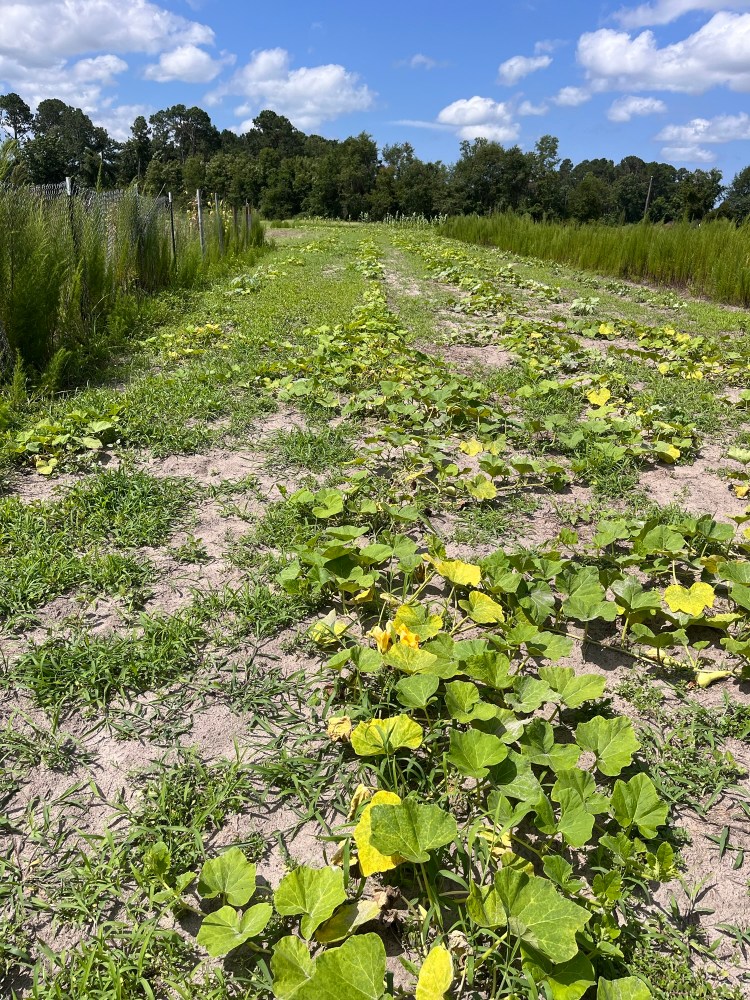
  • Homestead Learning: Adjust planting, fertilizing, and watering schedules based on lessons from this year’s losses (butterbeans, dragon beans, squash).
  • On Work & Farming: Farming can feel like drudgery, but writing, cleanliness, and organization help renew the spirit. Need for balance.
  • On Freedom: Independence feels different in midlife than it did in youth; propaganda is now seen as such.
  • Tacitus’s Germania: Reflections on race, gender, hospitality, and the transformation of German industriousness—how Christianization may have shifted values. Connected ancient observations to present Europe’s challenges with immigration.
  • Reflected on government corruption as possibly the natural state of affairs. Imagined a future collapse—global catastrophe, dark age, and eventual rebirth of new nations rooted in chosen culture.
  • Speculated that new religion may arise, as Christianity did after Rome, but this time out of applied philosophy and artificial intelligence.
  • Spengler’s critique of Marxism compelling, especially the claim that Marx misunderstood labor by viewing it through a businessman’s and Jewish lens, treating labor only as curse and burden.

Tuesday, July 1 2025

This morning a Mr. Hughes dropped in to see Daddy. I downloaded The Hobbit on audiobook and listened to it as I unloaded wood.

The weeds have taken over despite my reasonable efforts. Other places look good, but I just concluded that I will not catch up and need to decide what to do next. For now, I will continue to hoe in passing as walk from one place to the next. Leave the hoes in the ground and pick them up as I walk by.

Thursday, July 3

Like 100,000 other people the Hobbit leads me to want to write a story about the different groups of white people, each with their own characteristics, stories, strengths, and weaknesses. In then end they are all united to fight for our shared existence. Each race based on an actual European group, with the big powers being big powers. Recognizable as groups but no need for it to be perfect. It is a fable, not a history. A moral tale with clear good guys and bad guys. Whites aren’t perfect. For starters, we are too nice – have become so at least.

How so? The obvious answer is Christianity but I don’t want to be unreasonably harsh or accusatory. Give it a positive development story and then, “but x saw this differently,” Maybe this is done through a new group – the younger generation of the different groups – or a select group of them. They see the need to come together for mutual benefit.

Where do I set it – maybe instead of in Europe, make the setting be something like American before the arrival of the Europeans. Or maybe in a real place right after a civil war.

The antagonists will of course be the Jews: a parasitic culture that divides the people and makes them want to open their borders.

Saturday July 5

The beautiful silver bb flies victoriously through the July sunlight. The goats scatter in defeat. It’s good to be back at the farm.

The deer ate the entire plot of peas at the bottom. Fortunately, it was fairly small – maybe 20 plants. So, I picked the top plot and will cook them like an Italian green bean.

Monday, July 7, 2025

7:20AM

I start here rather than at the first because I have decided to pause and to catch up on processing all the vegetables and to catch up on writing.

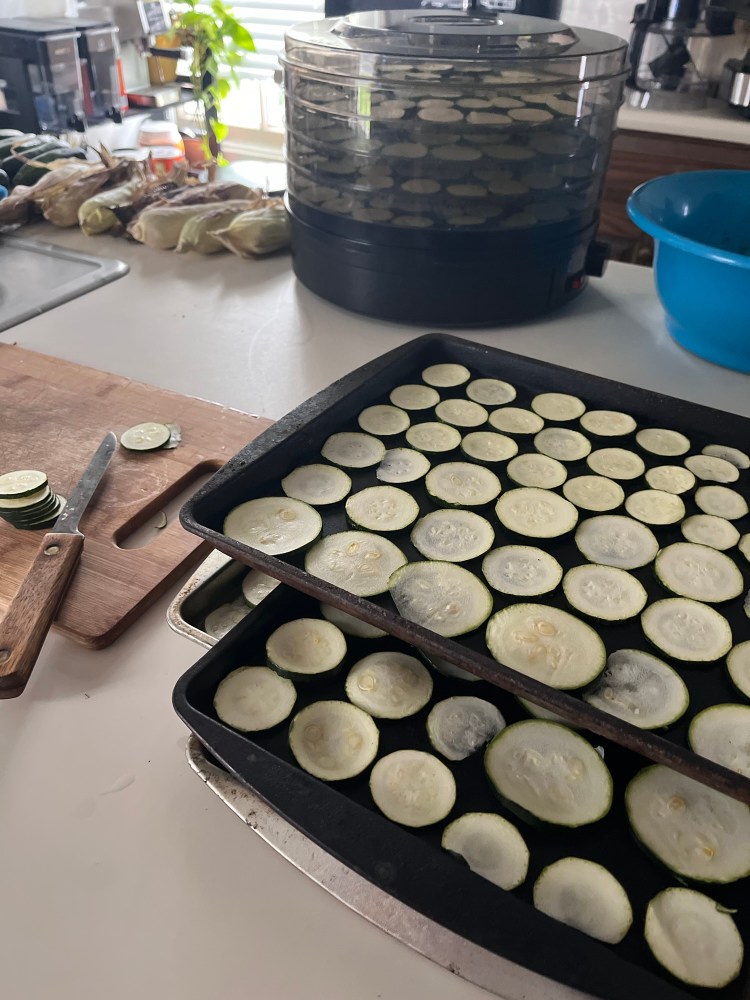
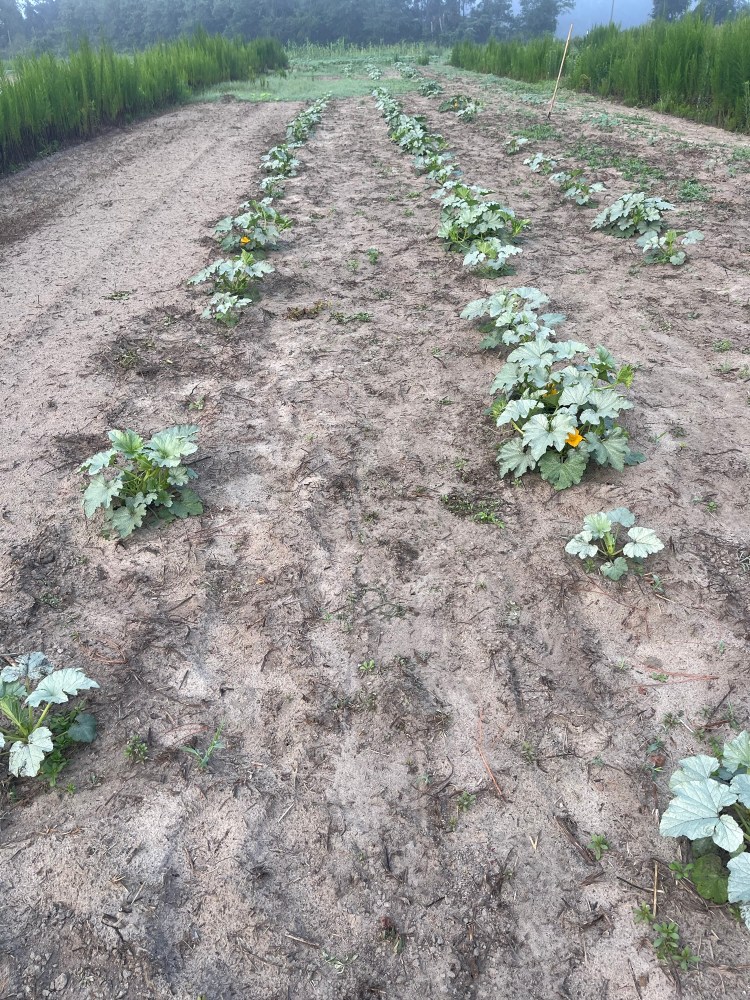
One of the reasons I have gotten behind is because I believed I should not freeze the zucchini. However, upon further consultation with the oracle, I have decided that I can freeze some of it. I just need to use it for casserole and soups – not stir fry or other places where I would like it it be nonmushy.

So, this morning I plan to freeze some (some sliced and some shredded), make some more bread (last night I ate almost a whole loaf), to dehydrate some in the dehydrator and some in the oven to make chips, and finally to pickle some. And that is just the zucchini. I also have some corn and beans.

The first task, in which I am presently engaged, is to write myself into the work. It is something like meditation. A way to organize my thoughts but also to help move me into the right mental mode. I would like to remind myself that this should be fun. I should smile and laugh. Be thankful for the bountiful harvest of squash and the freedom to do this.

The seed of an essay that will not get written lies in this last sentence. Coming off of the 4th of July weekend in my 53rd year, freedom means something different to me now than it did when I was growing up in the 80s. The propaganda was believable then – partly because I was a child and partly because the state was less dysfunctional.

Yesterday the farm felt a bit like work. It should not. I can act in ways that help renew my spirit. Cleanliness and organization. Catching up on chores. Reflecting and writing and following up on notes that I have made. As much as I enjoy writing, my personality is such that I like going all in on some new task – so much so that I neglect other things. Fortunately, I recognize this. That all-in attitude makes me a good team player – when there is division of labor – but I must reign myself in to attend to multiple tasks in different areas of life.

Step one is to clean the kitchen and the jars. This also involves making breakfast (an egg and zucchini sandwich) and a pitcher of tea for afternoon use. While doing this I have been listening to Tacitus’s Germania on Librivox. Some interesting claims include the following:

  • The Germans are a pure race because almost all immigration occurs by sea – and they live in forests apart from the Mediterranean.
  • All Germans are blue eyed and red haired.
  • The Germans treat and respect their women better than others.
  • They don’t care much for farming – and would rather hunt or make war. This is interesting in light of how the Germans have become known as an industrious people. Perhaps this was the effect of Christianization.
  • They are unusually monogamous.
  • They do not distinguish between an acquaintance and a stranger regarding the rites of hospitality. This I find interesting regarding the current state of Europe. How they treat the Muslim and African invaders better than they do their own people – and how this is destroying northern and western Europe.

This is a part of homesteading that I have perhaps been neglecting. I planned to do it in the evenings, but I don’t seem to have the proper motivation most nights. I planned to write Sunday mornings but for different reasons have been inconsistent.

This morning I have learned a good bit. For example, this last batch of butterbeans is stung so badly that almost half of it is not worth keeping. That was unexpected. Although they do seem to be less affected than the southern peas, this is a limitation. Next year I need to remember to plant the butterbeans early. I think the planting time for this year might have been ok if I did a better job tending them early. I have learned how easy it is for weeds to get out of hand, and I have a plan for that, but I will also need to do a better job watering and perhaps fertilizing.

The Oaxaca corn looks great. It has exceeded my reduced expectations. I am skeptical of the dragon beans. They looked so good early on but they have disappointed me this second half. That is probably due much to my lack of attention. But my impression so far is that they are a plant grown more for its looks than for its value as a homestead food crop.

Tuesday July 8

I made a leftover turkey soup from an old frozen carcass and threw in some dragon peas, butter beans, onions, and dried zucchini. It was surprisingly good relative to my very low expectations.

Thursday 10

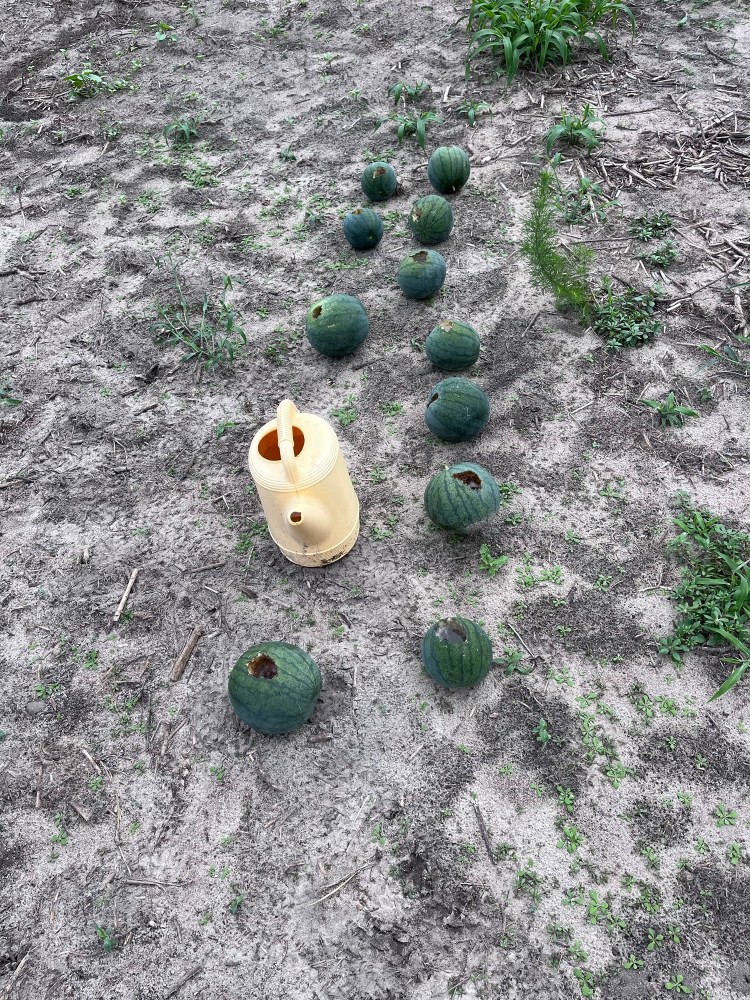
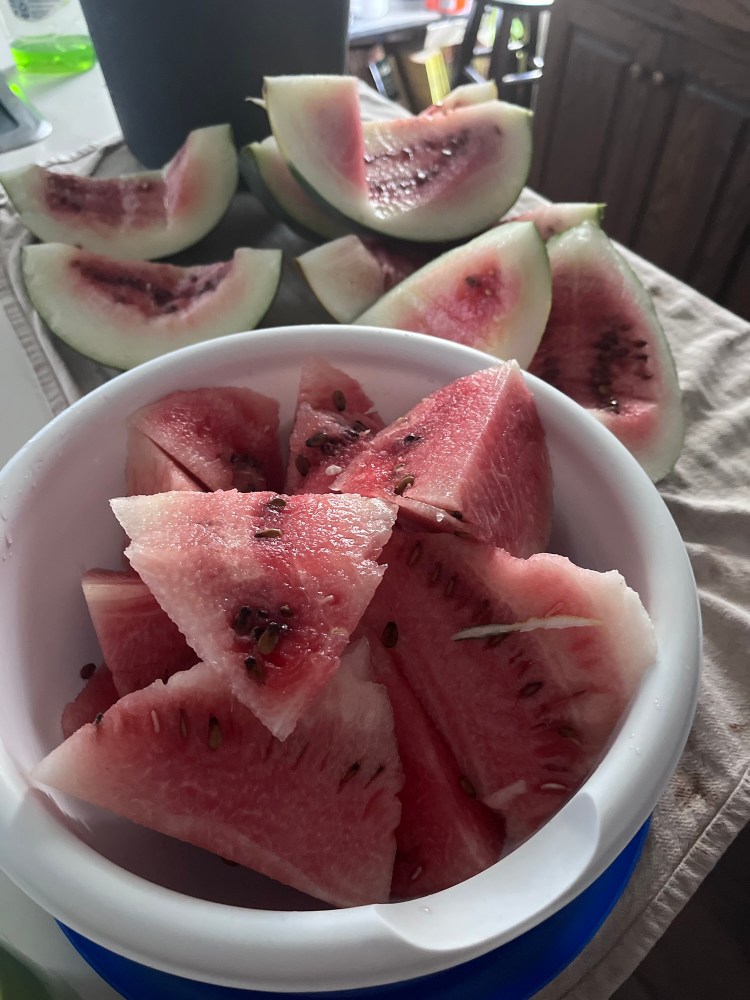
The crows punctured another 6-10 watermelons last night. Rather disheartening the percentage they have already gotten, with no sign of slowing down. If this continues, I will not have a single melon to harvest.

July 10

July 11

Sunday 13

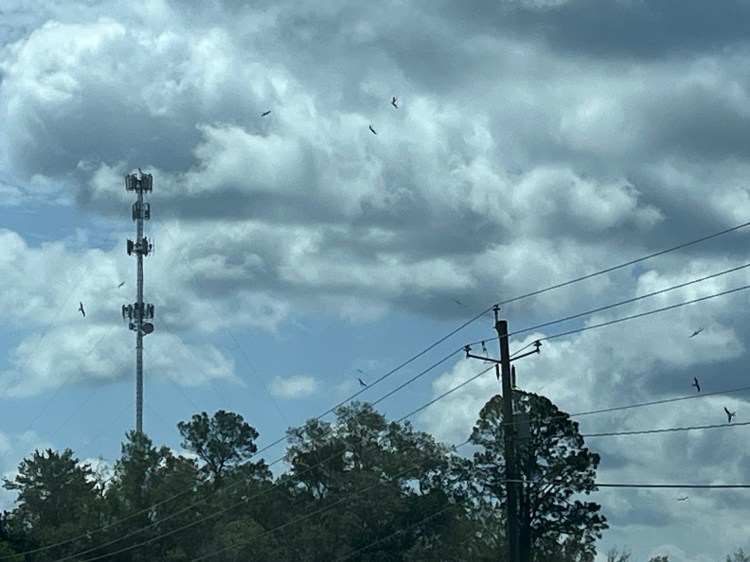
Yesterday on the drive back to Alapaha I saw between 35 and 40 swallow tailed kites circling – just before the 82/125 junction. I pulled over to watch for a couple minutes. I took a few pictures and a couple of videos. I would have stayed longer, but I had a Dairy Queen appointment with Kat. That was the first time I have eaten fast food in a while.

Friday July 18

I have plants dead and dying from lack of water. Corn 8 feet tall might not produce ears for lack of rain. No rain in the forecast for another 5 days. Its probably been a week since we had any.

Saturday July 19

Next year I should plant a small watermelon crop down by the creek just for the crows. Plant it first. Minimal care. Then let crows have it. Plant my crop up closer to the barns, separated by stuff they don’t care for.

Last night and this morning I am working o fall planting calendar. Summer is almost over. I have basically one week. Saturday we go to Stillwater for Ulrich’s memorial, and then it will be August and I will be back on contract for ABAC. I will be fully occupied by work in August. I need to shift back to thinking mode. How much can I farm while I am teaching? In the summer I have infinite time and still can’t seem to get everything done.

I learned a lot this summer and am just getting started. I expect managing the deer and crows will be more difficut during winter. I will perhaps hunt the deer in fall and early winter.

To manage time, I guess the farm will become my leisure. The natural plan seems to be to establish office and class hours and set aside sufficient daylight time each week to work on the farm and at home. Instead of wasting evenings with video games, twitter, or tv, I can do school work and free up some daylight.

July 21

Friday July 25

Saturday

I am hungry and did not bring food so I am eating an immature ear of corn raw. it is surprisingly good. I just picked a pot’s worth of southern peas (not sure if they are blackeyes, crowder, pink eye or something else). I never once watered, fertilized, or weeded them. I am not going to wait for them to mature because the goats, deer, crows, weevils, and god knows what else will eat them before I do.

The okra is almost ready. The ones at the end of the row, which probably got extra water, will be ready to pick in a day or two.

Sunday

It seems to me that our government is completely corrupted. But I wonder, has it always been this way?

This is the natural state of things. In order for new America to arise, I believe there would need to be a global catastrophe so enormous that 1/4 of the world’s population dies. We enter a dark age or at least a period of deep isolation and regionalism. Perhaps future generations move into sparely inhabited areas and of a now distinct culture and start a new nation based on their ideals. After the natives leave, for whatever reason, the people who immigrate to this new nation will choose to do so because they believe in the culture. Then we can have a new functioning nation.

Perhaps we are more likely to see the appearance of a new religion, not unlike during the unwinding of Rome. At that time, the new religion developed out of philosophy. But philosophy has more or less run its course. All that is left is applied philosophy.

The basis for the new religion will probably be artificial intelligence. It will offer salvation. it is amazing to me that anyone with knowledge and intelligence can still believe in the old conceptualization of the gods. But it is possible that people will be able to hold onto their belief in God by broadening the definition of God. This has happened repeatedly in Judaeo-Christianity and elsewhere.

I am disappointed that I am having to water in July. I was thinking I would not need to – tropical storms would provide rain. The gods have abandoned me.

While watering and weeding the roasters, a crow showed up on the far side of the field about 30 yards away. He hung around for a bit. I explained that I did not appreciate the way they pecked holes into all the different melons and then just left them to rot. He cawed to his friend in the trees at the creek 60 yards from here who responded in kind. He did not enter the field but stayed in the area beyond the field where I though out the melons they pecked. I am surprised he came down. This is only the second time I have seen one on the ground near the melons.

Maybe he was curious. Maybe his friend dared him. Maybe the dark clouds that just moved in made it seem later in the day than it actually is and he thought it was the time they usually arrive – after I have left.

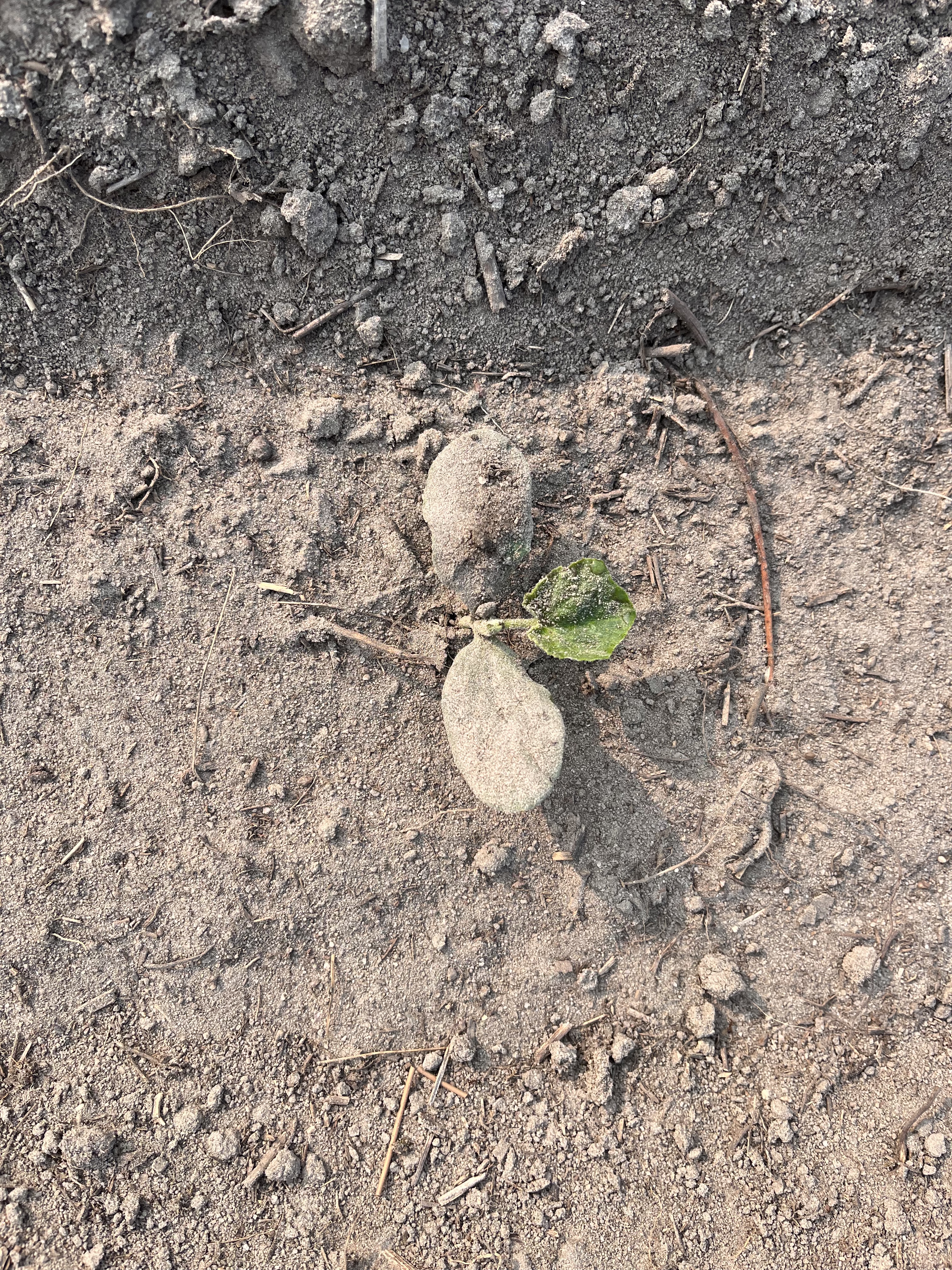
I suspect that some of the squash I am watering today will have died soon if I did not water them using old juice and milk jugs filled with tap water from Alapaha. Some likely still will die. I abandoned two plants already because I believe they will not make it.

Monday

This morning I am a little manic. I put some very large and heavy logs in the truck. I am covering the watermelons that seem almost ripe with grass and picking the ones that have a yellowish spot on the bottom. I have deemed them ripe enough to not forfeit them to the crows. If they are not ripe enough, I will feed them to the goats.

If I made a totem, now it would include goats, crows, deer, vultures, mockingbirds, red shouldered hawk, barred owl, bowfin, warmouth, turtle, chicken, dragonfly, bumblebee, rabbit.

I mentioned earlier that I plan to use the 2×8 model for planting next year. But I also think I should probably just plant less. Seeing my plants die from lack of rain or being overcome by weeds or eaten by crows makes me unhappy. I don’t have to do this, so I should do it in a way that makes me happy. I like the idea of eating more or less only what I grow, but I don’t think I can do that by myself without the use of poison and irrigation. So, I need to reassess what I want out of this and how best to accomplish that. I am feeling pretty irritated right now. Hopefully it will pass and I will be able to see it as a learning experience and appreciate the good things. Learn and do it differently next time.

Tuesday

Today was the first day I got a handful of okra. I am also picking corn. As with everything else, I am picking it early because I am not using insecticide. There has been a worm in every single ear I have picked. So I went and got my pocket knife and cut the top off of each one as I picked it up before even bothering to shuck it. I plan to work out and then process all of this this evening.

Tuesday

In Spengler, I am reading the best critique of Marxism since Nietzsche. The argument has several lines, but in short he argues that Marx understood labor only from the perspective of the businessman – and not at all from the perspective of the German worker. For Marx, labor is inherently bad, and businessmen are seen as inherently bad due to jealousy regarding the fact that the wealthy do not have to work.

Marx presumes that everyone hates labor and sees it only as a means to an end – survival and leisure. This is strongly influenced by his Jewishness. No Jew has ever willingly done physical labor or even unwillingly outside of a concentration camp. They see labor as evil. It was cursed by God in the Bible. Paradise is the absence of work and streets of gold. In the Jewish Heaven, there are no plants or nature or the pleasure that comes from hard work.

Freedom leads inevitably to inequality. The only way to begin to approach equality / equity is through the creation of a hegemon of great and unequaled power that makes everyone, save himself and his entourage, equally impotent to resist.

Marx’s influence is to blame for the working class and the conservative misunderstanding of one another and of socialism. That and the internationalism of the Jews who hijacked socialism.

June Newsletter

Overview

  • Daily Life & Work: Shifted fully into “faculty mode” (unpaid summer), spending days farming, writing, fishing, and running when body allows. Organized fishing gear, tended crops, hoed fields, built goat paths, watered, fertilized, and harvested zucchini, tomatoes, corn, and beans. Experimented with planting strategies.
  • Animals & Land: Managed goats—tracking their behavior, creating pasture paths, and observing herd dynamics. Caught and released fish, planted rye and beans, observed pollinators (fritillaries, bumblebees). Dealt with setbacks—back pain, bee stings, mildew on squash, low germination rates, and crop failures.
  • Personal Care & Routines: Adjusted diet (fish, eggs, farm food, reduced coffee, more tea), worked out in town, managed recurring back issues, and used writing and farming to balance physical and mental states. You ordered supplies (seeds, potassium bicarbonate) and began scaling your schedule around farm labor and recovery.
  • Projects: Built or modified farm infrastructure (shed, goat paths, fencing plans), transplanted persimmon and passionflowers, experimented with crow feeding, and discovered seeded marijuana due to fertilization. You also harvested and hung some cannabis plants.

2. What You Plan to Do

  • Farming & Food: Fish more often, stagger plantings for better germination, plant in wider rows for tractor efficiency, and create a second goat pasture to improve efficiency. Experiment with mustard and other plants as permaculture foundations. Monitor mildew treatments and continue seasonal planting (including winter crops).
  • Exit Strategy & Identity: Continue developing your “exit” from administration and lean further into faculty life, farm rhythms, and writing. Use solitude, farming, and physical exertion to reduce anxiety and stay centered.

3. Philosophical Musings

  • Technology & Humanity: Reflected that humans are as much products of technology as creators—technology is evolutionary, beyond good and evil, part of life’s fabric. All biological evolution is “tech.” Humans will always be reshaped by it, as much as they shape it.
  • Consumption & Systems: Considered artifact-collecting as a human instinct tied to specialization and surplus. Quoted Palahniuk: the things we own end up owning us. We have become the system of consumption, bound to it because it is efficient and familiar.
  • Cycles of Culture: Observed how systems degrade (Mississippians, Europe in the Dark Ages) and people leave them when they lose efficiency. Connected this to withdrawal from academia’s system toward farming.
  • Cosmos & Myth: Reflected on Aquarius, Ganymede, Saturn vs. Uranus, and how shifts in rulership mirror social upheavals (like the French Revolution). Suggested that the “White Spirit” of reason left the polis and now dwells in the land rather than in polluted cities.
  • Nature & Roles: From goat behavior, argued that humans exaggerate social explanations for hierarchy. Roles (mother, alpha, follower) emerge naturally from DNA and environmental shaping. DNA’s “goal” is not individual survival but species continuity—though “species” itself is a conceptual overlay on a flux of becoming.
  • Ontology & Gods: Reflected on the transition from spirits to anthropomorphic gods in Bronze and Iron Ages. Aryans told stories of courage; Semites of obedience and deceit. Interest in the transitional moment when spirits first began to be ascribed agency.
  • Nietzsche & Amor Fati: Returned often to Nietzsche: embracing technology and fate, affirming life as becoming without essence, seeing humans as the transhuman rope between past and future.
  • Democracy & Order: Critiqued democracy (echoing Plato, Aristotle, Spengler) and considered patriarchy as both oppressive and ordering, a structure that motivates individuals to grow stronger when it is healthy.
  • Aesthetics & Living Well: Fog over fields, pollinators in mustard, cloudy mornings, passionflowers, and the near-monastic rhythm of farm life. Homesteading not just as survival but as a philosophy of living well, close to solitude, growth, and beauty.

Sunday, June 1

There seems to be less going on in Twitter World as I shift my focus toward the farm. It is almost like the shift in attention from the polis in the Greek and Roman age to the spiritual in the medieval. I am not Christian, but there is much to admire about this shift. One might even see the medieval as a return to an earlier Pagan life, distinct from the Platonism that influenced late antiquity. But this interpretation regarding focus is, however, more imposed than real. It is philosophers, clerics, and others, reading back into history to create narratives whose intercourse became / becomes an accepted metanarrative, which is a loose and shifting amalgamation of petit narratives. To wit, most Greeks and Romans were intimately close to the land, just as much as those in the medieval period, but less than today.

I should number or name my fields so that I can more efficiently identify them in my notes. … Today and yesterday all fields were watered except the bb patch and several rows above it. This does not include the abandoned fields at the bottom. It appears the germination rate of the upper fields will be very low due to lack of rain. That is unfortunate, but it is good that I bought more seed than I thought I needed. I suppose.

Tomorrow, I should finish this cycle of watering and further clean out the butter bean patch. I would also like to begin mulching. It will be tempting to just water all the time, but I should not do that. Allow for Providence and try instead to harmonize with nature sustainably. That is, I should not devote any more time to any plant or collection of plants than I will get out of it in terms of calories, the pleasure of the task, and knowledge. Don’t waste too much time watering. If needed, I should change my approach and fish and hunt more or make crafts and barter for food.

I should identify a day to cut wood in Alapaha.

Monday, June 2

Today is the first official day for me in faculty mode. It seems like I have said something to that effect several times already, but starting today, I don’t get paid for the next two months.

I am down by the creek organizing fishing gear – in a tackle box I bought for my little brother and sister many years ago (25+). The goats are out The went to the bower first today and have not left it. After not seeing them for some time I was concerned that they might have migrated to the yard and eat my trees or tear down a fence. The muted panic led me to get the binoculars, which I have basically forgot about since placing them in the tool box months ago.

Even with the binoculars, standing on the top of the toolbox in the bed of my truck, I did not see the goats. The dog fennel that dominates this land has gotten high again – over 4 ft. So, I went walking and eventually found them where I left them.

I appreciated the binoculars. I am glad I bought them when I made more money. That was a strategy of mine. Or maybe it was just a natural consumptive instinct of humans to collect artifacts. As our lifestyles changed from nomadic to sedentary, we saved, without consuming, more of what we collected. As division of labor and technology increased (and we became more of a specialized social being with different organs), we began to produce artifacts to be used by those who did not create them. As such, this plus the increased efficiency from specialization and the associated tech that developed now more rapidly along a diversifying tech tree, we collected more things. As Palahniuk noted, the things we own end up owning us, and so it was that we settled into a consumptive form of life that tied us to a system that did not even exist a few millennia ago. And we are that which repeatedly do. We became consumers, and plugged into the system. We more than plugged into it, because it is composed of us. We became this system. And we remain connected to the system because it is familiar, and we are herd animals. The further away we are from the system, the less efficient we are.

When the system degrades – it is always in flux – it becomes less effective, and people are more likely to leave it. This seems to be what happened to the Mississippian culture in America – and in Europe during the Dark Ages.

I need to do more fishing. Initially for the sake of food. I have basically run out of farm food for the next few weeks because the early crops all failed. So now I am going to try to supplement my diet with fish. Fishing more will reconnect me to the Mark of my 20s. The one that always had a fishing pole in the back of his truck (or car). A poor Mark, plagued by frustrations.

Organizing the tackle box casts a light onto my memories and an old but familiar way of interacting with the world.

Now that I am living the apocalypse, I no longer need to base my organizational method on apocalypse concerns. How I am to actually use things in this new apocalyptic reality should guide my organization. That means a small box with a variety of gear commonly used when creek fishing and exploring. Then a back up for that – the place from which I will restock the cargo pants pocket sized box. Finally, most everything else will go in the old green box.

… Today I followed my plan without trying. Farmed this morning, wrote this afternoon, and now going for a run (549). Maybe. My ankle hurts and I have stopped “running through pain” since I am not training, and my primary goal is to be active and healthy. Injuring myself is not helpful.

While running I want to think about the conclusion for this paper.

Humans have evolved alongside tech ever since we were human. Other organisms have evolved in response to tech developed by other organisms in their environment. I am using technology here in a broader sense than it is commonly understood. Tech is understood better when we realize that humans are the product of technology – not just the creators of it. All biological evolution is technology. Humans will change in response to human developed tech whether we want to or not. Tech is beyond good and evil. It helps constitute the epiphenomenal fabric of the organic world.

I should close with Amor Fati: Embrace the world as it is and do not be afraid of technology or the future. Do not wish the world were other than it is.

Wd have always already been Nietzsche’s transhuman rope, bridging what came before and what will come after; our ancestry and our progeny. Also include that which is always becoming has no essence.

Tuesday, June 3

A machete sticking out of a bucket beside a couple of fishing poles in the bed of the truck. Half a dozen egg cartons stuffed into a styrofoam minnow bucket. A collection of various seeds on the dash. A backpack full of clothes and toiletries.

I am Aquarius, the water bearer. I bring water to earth – to landed locked plants and animals.

According to my oracle,

Aquarius is the eleventh sign of the zodiac, associated with the element of air and traditionally ruled by Saturn (in classical astrology) and Uranus (in modern astrology). The sun typically moves through Aquarius from January 20 to February 18, though dates can vary slightly by year. … Ganymede, abducted by a god and elevated to the heavens, pours divine drink—representing transcendent knowledge or insight. He is chosen, removed, and made immortal. Saturn’s rulership gave Aquarius the flavor of order, detachment, and rational discipline—appropriate for the archetype of the “philosopher-legislator.” Uranus’s rulership reframed Aquarius as the visionary outcast, the rebel who sees the future and dares to break old patterns. Thus, the Water Bearer image remains constant—but what he’s pouring changes tone: Under Saturn, it’s wisdom within order—the cupbearer serving the gods faithfully. Under Uranus, it’s wild insight, inspiration, or even destabilizing genius—Ganymede as a Promethean figure, not just a servant of Zeus.

Apparently, the discovery of Uranus in 1781 led to the French Revolution. After that, Aquarius shifted domains.

It is interesting to think about how, during Greek times, reason was associated with the polis; today, the White Spirit no longer resides in the polis. It has returned to the land. The cities are polluted, decadent, and profane. The gods have changed from those of our ancestors to those of our enemies. With the fall of Athens, Plato, Aristotle, and others expressed their distaste for democracy. The rule of the many is only as successful as the many. Few would argue that the quality of the stock of our cities has improved over the last 75 years. The White Spirit resides sparingly in smaller cities.

I am out here practicing the quasiapocalyptic life for which I have prepared for years. But today does not feel apocalyptic. It feels more monastic.

At this point, the germination rate for the latest round of plants is about 40% (eyeballing). I might get more stragglers after the rain that is supposed to begin tomorrow. I don’t expect to get half of what has not yet germinated. If I get one in five of the ungerminated to sprout after the rain, I will be satisfied and not disappointed.

My perspective will surely change some with experience, but I believe the method I am using now is pretty effective given the tools and time available. I would likely have a higher germination rate, for example, if I started everything in trays – but that adds to the work – planting them twice. There is also the issue of space with this. I don’t have enough to start any where near half of what I am planting in trays. So, moving forward, I should just expect about a 50% germination rate when planting this time of year. The optimal solution, then, might be to plant only about 2/3 of my seeds, and then fill in the empty spots after about three weeks – when they are a couple of inches tall. This will also likely stagger the harvest time and prolong the season just a little.

Wednesday, June 4

Rain is here. Hallelujah. The weather forecast has not been very accurate.

There is a large tractor in the filed beside me spraying something. I presume it is liquid fertilizer, since it is sprinkling and rain is supposed to be on the way. I am planning to fertilize some between the rains as well. I fear I have killed many things fertilizing dry in the past, so I am a little wary. But this is likely the ideal time to apply.

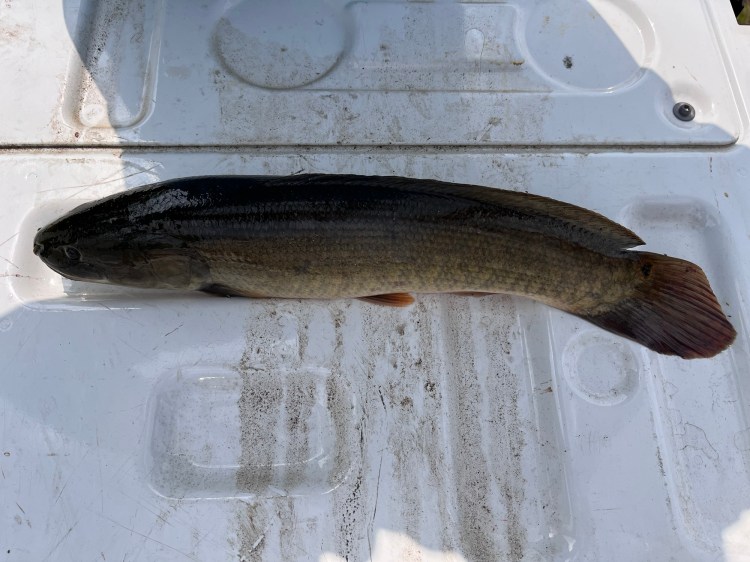
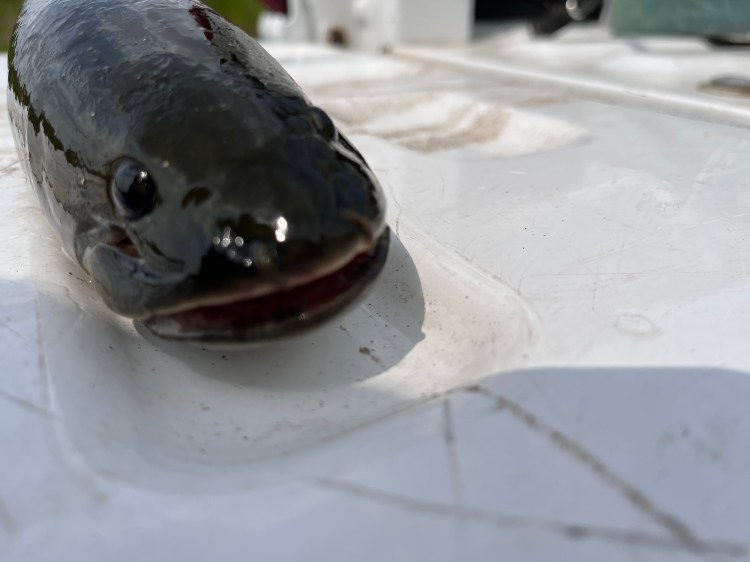
Yesterday afternoon, when I got tired and hot, I went fishing. I caught a warmouth and bowfin. The bowfin is fascinating. It is said to be 165 million years old – one of the oldest living creatures in north america. I took it home with the intention of eating it, but I stopped by to get some eggs from Christie and talked with them for a bit. When I got home, tired and hungry, Kat was already making supper, so I filled up the 30 gallon fish take that I emptied on Sunday and put the fish in there. This morning I returned the bowfin to the pond.

I am not accustomed to rainy days at the farm, so I must figure out what to do. I wasn’t expecting rain until late afternoon. For now, I am hanging out in the shed.

One of my marijuana cuttings has developed roots.

I planted the Virginia rye in the pasture and all the old peas left over between it and the deer fence. I expect the germination rate to be low and for the weevils and goats to get them, so I just broad sowed them and then tilled the land on 1. I also planted the castor beans along the west side of the deer fence. Looking for a maker to label where they are planted. I did not find one, and that was frustrating. At the bottom of the miracle grow box I found several packets of seeds that I did not plant. That too was frustrating. I think they were mostly from the second group of seeds I planted. Crookneck, peppers, and basil mostly. I used them to fill in empty spaces. I can do better.

I went into town in the afternoon to lift wights and get groceries. It was not a positive experience. I felt out of place and just wanted to get back to the farm / Alapaha. Some wine and weed helped ensure I was pleasant and not take frustrations out on Alex and kat.

Thursday, June 5

Small chance of rain today. At 630 in the morning it is already / still muggy – but cool. Today I have to go back into town for bloodwork and to let IT move my computer.

Women often talk about how the patriarchy oppresses them. I’m sure it does. Anything that brings order and structure does so through what could be called oppression. But that vague and nebulous thing, patriarchy, is a power that organizes and evaluates and holds accountable. It also motivates us to do well and desire to be recognized by the patriarchy or its representatives, such as our fathers. We are thereby encouraged to act in ways that promote the patriarchy, and if the patriarchy is healthy, it encourages us to act in ways that make us healthier, stronger, and more effective in the world. By extension, it supports the groups that house such individuals as well.

Hoed a bit until my back started hurting. I strained it earlier this morning wiping beef blood out of the fridge.

The goats came back early this morning. I suspect it is the heat. It is incredibly muggy this morning. As I write this so there is a slight breeze that makes it feel much better than it did only five minutes ago.

Tilling a few feet from the edge of the broom sedge / wiregrass mini-meadow to create a path to drive the truck and other equipment down, I disturbed what I first thought was a hornets’ nest. When I turned around and headed back I for a second cut, I noticed the swarming. It was pretty clear that I had disturbed a nest. I have done that only about four times. Observation and research led me to believe that they are actually bumblebees. Apparently, bumblebees will build their nest in abandoned rabbit burrows and grass tufts. The combination of those two describes this space, which has been undisturbed for about a year. It makes me happy that this little microecosystem I have created hosts bumblebees. As I was smiling and admiring the meadow, the lone bee flew at me so fast that it hit my headphones and bounced off before I could move at all. I turned and walked fast, and it stung me once on the shoulder. Then I started jogging and it stung me on the base of my skull, then I started running as fast I reasonably could with a hurt back and heavy boots, it stung me in my other shoulder. It followed me for about 100 yards I think. Much further than I expected.

Fuck. What a day. And its not even lunch yet. I just saw that many of my squash already have powdery mildew, even though they have only one or two leaves, hurt my back; amazingly miserable humidity, ran over a bumblebee nest and was stung repeatedly while fleeing. Pulled out lunch and see that I forgot the salad dressing. Fortunately I have chatgpt and walmart. I ordered some potassium bicarbonate. Should be here Saturday. So, on to eat my dry salad before working out.

As I was leaving, I tried to give lettuce to mid goat. She would not eat it – shithead got up and walked over ate it. I have seen this behavior many times before. I believe it tells us something that we should have known all along about the nature-nurture debate. I think most of the social psychologists and sociologists who have explained this sort of behavior in humans have not raised goats or similar livestock and, as such, underestimate how similar human behaviors are to animal behaviors. This causes them to overimagine the particularly human causes of this behavior. It is easy to do, since there are none. The goats do not oppress one another because of their race, gender, and whatever else. They take on roles provided to them by nature. They take the lead or demure because their genes tell them to.

It is not so simple, of course, that they are born with the traits they will have. These traits develop within the genetically provided parameters in response to their experiences (in the environment).

And their DNA doesn’t really care about them. Of course it cares about nothing. So, more precisely, I mean that the function of the DNA is not to preserve the individual; it is to preserve the species.

This is interesting, ontologically, given that the species is in a constant state of flux and therefore no species actually exists in the world. Species is a superimposed concept. And yet, animals cannot procreate unless their dna is similar enough – i.e., are of the same species.

As evidence for the point above, the behavior of all the goats evolve in relation to their experiences. But there also seem to be roles – some more clearly defined than others. Mother, for example, seems to perhaps be the most primary role. The second is probably alpha male. No goats are born mothers or alpha males. They grow into these roles. Moreover, females will never become the alpha male, and males will never become mothers. Their being as goats in a herd is determined by their dna. None are oppressed.

Human DNA gave rise to Aryans and to Jews, conquerors and parasites. With goats, it would be easy to say that because the goat is king or whatever, he gets all the good stuff and the peasants don’t. However (as I have mentioned before), the alpha also takes all the risks. He leads them into new places, and when they return to the pen, he stays behind to protect the rear from their natural enemies (coursers). He eats the most and is the biggest and is expected to protect the herd. He becomes the animal best suited to do this. The others instinctively allow it. Therefore, the second generation nanny does not take the piece of lettuce but waits for the alpha to come and eat it. She is more vulnerable to outside threats, and her job is to be safe and make babies – which is difficult enough and wears on her body.

I picked my first two cherry tomatoes today – little orange ones.

Friday

Back trouble yesterday and this morning. Praise Allah that it popped back into place this morning. Now I am herding goats and considering how to use the wild mustard as a foundational permaculture plant. It is currently the favorite of the pollinators. The goats love it. I myself like the seeds when they are young. They taste like spicy peas. They are prolific, but they are not as invasive as the grass.

The gulf fritillary seems to be the primary butterfly presently. The first ostentatious passionflower I ever saw was a few hundred yards from here on the other side of the back farm. I think I was down for some holiday from college. I think it was that same weekend that I found a some sort of dung containing a coin-roll of persimmon seeds. I now have a persimmon tree growing in the yard. I transplanted it from the creek. It was a sucker. I thought it died this winter, but it has come back, a little bushier, but seemingly very healthy. I also have a few passionflowers that were originally transplanted from Alapaha. It is doing well, trained up an arch placed within the deer fence garden.

I like the idea of strategically placing boxes and memorials and bird baths, but I need to be thoughtful of where.

The area for the wild turnips should overlap that of the Virginia rye, lamb’s quarter, and second gen peas.

For the crow spot, maybe I can use something like a deep fryer basket. Secure it to a post and place peanuts in it.

Saturday

I believe the paths I cleared to separate fields from goat pasture is working this morning. The goats have disappeared into the dog fennel. They poke their heads out occassionally. At one point, the all came out and then ran quickly across the plowed area as it they did not feel comfortable in the open space between the two vegetative areas.

Interesting to think that when the beans come in, then the dynamics will change. I will have to decide if I want to allow them to eat them. I want to train them in ways that are effective, without confusing them by constantly changing things up.

I saw what I think was a couple of whooping canes again this morning – fourth day in a row. ChatGPT is suspicious and wants me to take a picture.

I am using the stirrup hoe in the freshly planted area this morning. I think I have found its optimal use. It works very well here with little effort on these small weeds in the fluffy dry dirt. Getting them now when they are young will save a lot of effort in the future.

Sunday

Beautiful cloudy morning. Almost cool with the very moist breeze.

The ants found my crow food first. It is actually such an impressive feat that I rather admire them for it.

I need to find ways to work out more regularly. This winter I should fence in a second pasture – the permaculture spot – to increase the efficiency of owning goats and improve their health. Otherwise they are too much trouble.

Last night GPT suggested I drink only one cup of coffee per day. Presently unwilling to do that. However, I have switched to caffeine free tea. Perhaps I should stop drinking coffee outside and not bring any to the farm. I did not today. If I had some, I would probably drink it, but I chose to not bring any.

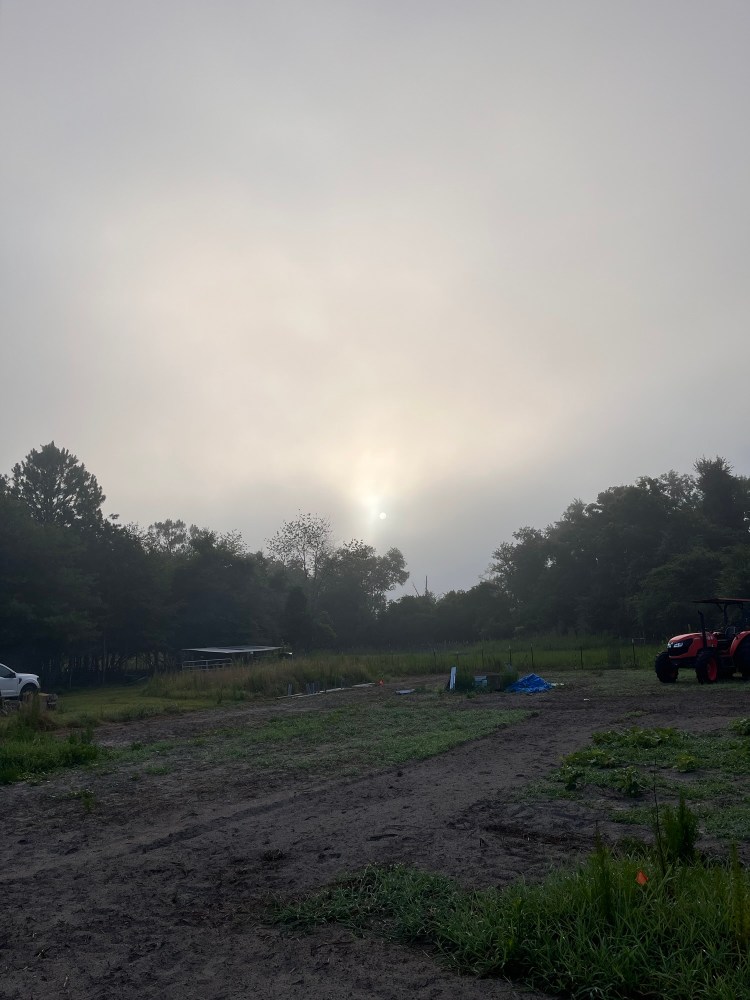
I just came out of the shed and saw fog blowing through at about 20 ft high. I could barely see it but I caught it three times as it moved across the lower field by the creek. Magical.

This is the most beautiful morning I have seen in a while.

Because of my back, the last few days have been an exercise in I’m not going to do that.

Wednesday

Dealing with what was once one of my biggest concerns about homesteading: how to manage back problems. This is not something that will ever go away. I need to build working out in my schedule. It will keep core strong and also keep my ocd self from spending hours hoeing or whatever other repetitive task that might inflame the back.

This morning is not as nice as yesterday. I was unable to get fire brush fire going even with lighter fluid because all the branches are so wet.

This year the okra did not form – despite my high expectations based on a couple years ago. The butterbeans have done well, and the butternut looks healthy.

Thursday

I am late heading out to the farm this morning. Already 940. I stayed up late last might by my standards to buy seeds and do general prepping because war drums are beating again. Israel wants us to attack Iran. Getting here this late affects my plans to spray squash with potassium bicarbonate to help with powdery mildew.

Mentally I am in a better state today in part because of the good workout I had yesterday. I seem to build up a generalized anxiety that is only relieved by good sex, lifting heavy weights, or other intense physical exertion. Weed helps in the short run.

It is about a week now that I have had only one cup of coffee per day, and it has not been a problem. Being out here on the farm most of the day rather than in front of a computer dealing with the petty people stresses of being an administrator has been good for my health and my energy level. Yesterday my back was out of alignment so I left early and went to the gym. I was able to realign it by walking 30 minutes on treadmill and then laying flat on my back and doing leg extensions. I was so happy when it popped back into place. I got home earlier, cooked supper, and had energy in the evening to do other things.

Last night I went ahead and ordered my winter seeds. Seems like a good idea to get ahead of any craziness that might unfold in the ME very suddenly.

Hoed for five minutes and back flared up again. I will take an ibuprofin and find something else productive to do. Ideally, I will not need to water any more this summer – except for newborns – if I plant any. The okra and squash I bought earlier – already a little late – were delayed.

Friday

The goats are tasking and eating the plants that were burned in yesterdays fire. I did not expect that.

Monday

Left the house in a rush this morning, feeling crazy. Like I could not get out here fast enough. Now I can breathe. I am sure the roach helped. It is interesting how now the world feels like it is on a different frequency or harmony or something. 2 2/3 inches in last 24 hours preceded by 1 1/2 inches.

Tuesday

Ive come to the realization that the best planting approach going forward will be to plant everything about 8 ft apart. Unless I get some different implements. I should definitely study this before planting the fall crop.

Planting 8 ft apart will allow me to weed with the tractor, which would be like 100x more efficient for labor – but about 2x less efficient with land use. I guess another concern would be erosion. It would not be practical to mulch that much space.

Maybe I can plant two rows tight – two feet apart – then the 8 foot space. I can manage the small space on my own and then the larger space with the tractor.

Wednesday June 18

The company that built the shed has apparently gone out of business. Website is online but the links don’t work. With the help of chatgpt I found instructions.

Since I am building the shed right where the goats usually come and go, I need to go ahead and create a new exit down at the southwest corner of the pen.

Sunday June 22

I figured out what is “wrong” with my marijuana plants. Because they were fertilized, they are producing seeds. I have never seen that before and was a little confused by why the plant stopped growing. Yesterday I harvested about 4/6 and hung them in the guest bedroom upstairs.

Monday

The delicata are looking much better. Coming in strong after a slow start. I have maybe 10x as many as I once thought. I wondered if I misidentified – but I marked everything, so that is unlikely. They probably just got off to a slow start. That combined with weather patterns kept them behind – until last week’s rains. They are winter squash and take a long time to mature and take up a lot of space. Hopefully that will help with weed control.

I wrote myself into this position. At least I used writing to help me get here. Exit Strategy. I have not (yet) fully exited, but the planning involved in the exit strategy afforded me this option – to walk away from admin on my own terms

Watered and hoed most of the butternut at the top of the bottom field and most of the delicata and okra. Not going to tend the okra closest to the treeline. Whatever I get from them will be a bonus.

Looks like I will not get around to working on the shed. Going in to meet with Provost and dean later for some secret meeting where they will probably ask me to do something I don’t want.

Bringing water from home was effective. Drove the truck down and used it as a base -tools, lunch, water, etc. Good strategy. As usual, I am surprised by how little I got done today. I stay occupied and time passes very quickly. I enjoy the near solitude and the hoeing and watering and thinking and looking at the clouds, listening to the birds, learning about the plants and watching them grow. I feel like I am living well.

Yesterday and today the temp in truck read 113, but it doesn’t feel that hot.

Tuesday June 24

Yesterday before leaving I harvested about seven small zucchini and 11 cherry tomatoes, about 8 ears of corn and two cups of butter beans. I had to toss about four zucc because they are rotting at the end. I don’t know if this is because of the squash bug or something else. This is leading me to pick sooner than I would. I also had to discard a large beautiful tomato that I probably should have picked earlier. I should water the peas next.

Wednesday June 25

Wow, June is flying by. Not unexpected.

I tend the plants so I can eat their babies. I kill competing plants. The activity of gardening can expand to fill a lifetime.

Thursday

For some reason I feel tired and a little lazy. I am still plugging away, but at what feels like 2/3 speed. Threw away 9 zuc from top field but only one from bottom. It appears the fertilizer is helping. Watermelons are growing pretty quickly as well. I have about half a dozen baseball sized and a few grapefruit sized.

Friday

I am considering a drastic change of schedule that would involve me being here at the farm M-F at dawn and then home for lunch. The problem with that plan is that I cannot workout. I can easily justify the 15 minute drive from farm to town but not the drive back to Alapaha and then back to Tifton and then back to Alapaha.

Monday

The late bronze age and early iron age anthropomorphized gods succeeded the spirits which had recently been ascribed agency alongside the habit of telling the stories of great men. For the Aryans this involved the telling of courageous deeds. For the Semites, it meant tells of deceit and obedience.

I am interested in the time when the spirits were on the verge of being ascribed agency. Strongly suspect that this happened not all at once but in an overlapping series of starts and stops in countless episodes scattered across Eurasia. I found no good audiobooks on the topic.

The goats are in rut, and the alpha has taken to spending most of his time chasing away the young males.

May 2025 Newsletter

This is 1/x monthly or biweekly newsletters that I plan to post here on the blog. This is an alteration of my previous idea to blog daily or bidaily.

Plans are like clouds in the sky, shifting constantly in response to the environment.

I am moving in this direction for the sake of efficiency – nature’s selection pressure. Or something like that. Recently, I have found that I am most likely to write on my phone at the farm. This is not ideal but more important is that it is real – it actually happens sometimes and more than writing in a journal.

The goats have influenced this change.

Events like this – What are you doing!? – being screamed by and at each of us – and the purchase of a tractor led to the pasturing of the goats and the repair of the fence.

Time is another key factor.

April 25, 2025

Dear Interim Provost X,

After Considerable reflection, I have decided to resign from my administrative position as Assistant Vice President for Academic Affairs and Director of Faculty Development, effective at the end of this term, and return to my tenured faculty appointment. …

This change has allowed me to spend more time at the farm, herding the goats. Because I have learned to be instinctively efficient (or busy), I began writing on my phone. I didn’t even have to write. I could just speak. Provided I was not using a bluetooth (as I often am), I later discovered.

The quality of the translations are so very bad when I am connected, that I began dictating them (and also typing) into Apple Pages. I will regularly post them here. Its like those long form interviews, except it is written rather than spoken extemporaneously. I would be willing to pay, Black Mirror style, to not have to listen to those. Though I am happy to read their thoughts on Twitter, I would prefer something between twitter posts and academic essays. An electronic journal of the Exit Strategy (a book that I have apparently stopped writing).

Perhaps I should post those here daily to secretly coerce me into finishing the book.

May 16, Friday

First of four day summer schedule. Next week “work from home” bc the AC for most buildings will be out. This is South Georgia, mind you, and the temp will reach 93 today.

Half intentionally I just opened another chapter in my life journal. And gave the previous two months of journaling a name – Spring 25. Then the name of this chapter epiphenominally revealed itself.

I have decided the deer that pass through here aren’t especially fond of young corn and tomatoes. That actionable intel leading to a data driven decision improving the efficiency of my operations with no cost beyond measurement and assessment.

It feels nice in the shade of the persimmon trees looking out over a depression, 60×40’ish, triangle shaped. It has a tall asian invasive grass that americans love to hate. Rather than try to turn it under with the tractor, I will set it aside as a shared permaculture space for me and the goats – just purchased lambs quarter seeds for this spot. More for the goats than for me, in the short run. And that’s ok, because I plan to eat the goats. Sounds kind of evil doesn’t it? Keeping goats for the sake of killing them and eating them. Christianity has taught us to feel this as evil. But all things die, and I must eat. What makes the goats better than the grass they will eat or the plants that I grow and eat? We all participate in our own oppression. Sometimes the source of our oppression improves our lives. We accept it because we deem it better than the alternatives.

But sometimes we don’t.

Saturday May 17

The crookneck squash is doing well. I have picked six in the last two days from three plants. I have one more in this bunch that has not produced fruit yet, but I believe it will.

I took two cuttings from a marijuana plant this morning. It is not producing fruit yet although the two males are done, and two other females have ceased making large leaves and are just producing bud. Its pretty cool to watch.

I also planted five trays of tobacco seeds – 100 each. Two Virginia, a Connecticut, a Turkish, and the Aztec Rustica.

Made some sun tea with the lemon bergamot growing in the herb garden. Its about the only thing that survived the hegelculture, drought, and goats.

Sunday May 18

Day 3 of the new chapter.

Today’s harvest is four radishes, all taken from the very bottom near the creek. I am surprised and disappointed by how poorly everything did down here. Perhaps the deer ate much of it. All I see growing out of those four plots – about about 7000 square feet I guess – were those four radishes, one and a third zucchini, and some very poor looking rice. The two largest radishes were already getting woody, so I composted them.

I watered again today – one trip / 10 gallons. Okra, onion, pigeon pea, and trees. I was delighted to find my two pecan trees today – the first ones I planted, actually. They have been hiding from the goats and the deer in one of two grass prairie microecos I created.

Actually, I think I found one yesterday. The larger one today. My guess is the leaves came out after the last rain.

My campfire – the sandstone rocks that make the ring – is filling in. I have taken to picking up rocks when walking the field with a spare hand. I haven’t cooked on it in a few trips – mostly because its hot, probably.

This morning I mowed some of the land on the east / goat side, including the depression near the old deer bower. The goats followed my lead and spent some time there today.

Monday, May 19

Day 4 of the new chapter takes us back to the old chapter a bit. I am technically still working today and through the end of the month, but the AC is out this week, so most of us are working from home. I had a meeting online this morning, checked and responded to emails a couple of times. When I got caught up, I went to the farm and stayed there about 2.5 hours. Goats to pasture for about an hour. Planted some things Kat brought down: olive tree, sweet potatoes, Irish potatoes; and I watered the tomatoes, squash, and the stuff inside the deer pen. Mended fence for probably 30 minutes – mostly because I noticed when I drove in that I left my tools out there yesterday. That was about all I did. I meant to pick the rutabagas but forgot.

After lunch, I will work on course development and will make a plan for the rest of summer. The rest of the week will be similar. Next week I will be on campus and will use some of that time to move offices and hopefully to workout.

Tuesday May 20

Stayed up late by my standards – 1130 – drinking and playing the guitar. A little sluggish this morning. Ran 5k. Walked some but was pleased with my stamina. Planted the lambs quarter this morning – sowed the depression. Doing so I discovered that the tangled mat of dead long stemmed grass that covers much of this area protects moisture in the ground beneath. Exposed areas are like flour. So I moved the grass aside with my boot, sowed a handful of seeds, and then covered it back up. I will be happy with a 20% germination rate and 1% seed rate. The goal is for it to be one of several self seeding plants that constitute a low-input, productive, micro-wetland – or swale.

The blood butcher corn I planted in this completely dry soil has germinated. I wondered if it would. The rate appears to be pretty good, so I am watering it today. I watered it lightly once before, but I did not know if it would do it any good, because the soil was like flour. Because of the leaf structure, many of the baby corn plants have a beautiful sphere of water – like a crystal ball – captured at the base of the leaves, where they emerge from the stalk.

I keep having to shoot the goats out of the plots. I don’t know if they are too dumb to understand or they just don’t care that I don’t want them there. I can get a shot decent enough to make the alpha jump from up to about 40 yards. It appears that they would much rather eat the crabgrass than the butter beans or corn. I have seen a couple of examples where they bit into the butterbeans accidentally and then just dropped it rather than eat it. I tasted the leaves and found them to be bitter. So, having so much crab grass in this plot seems to be an unexpected positive. Maybe.

I should water the tobacco every day rather than every other.

Wednesday May 21

I watered the tobacco plants yesterday. This morning the sand is concrete. Not sure what to do. Instinct is to but them in shade, but that opens up predation. I guess I need to get some clear plastic wrap to help hold the moisture in while allowing sun. Maybe a full sized greenhouse next spring.

It is another amazing overcast and windy morning. The recent lack of rain is disappointing but the weather can hardly have been better for this time of year.

Nature instinctively creates difference within and among populations.

Currently, I am standing in the shed. Its raining pretty hard. I was out plowing in it, but I have plowed all I want to have plowed, for now. There’s a lot of stuff I would like to transplant. Vegetable plots are full of weeds. I would like to consolidate the plants into a smaller area and till under the weeks and plant new seeds. That is a lot of work, though, and I believe it is likely not worth the calorie and time input. Before turning a new plot, I want to reset the pin on the tiller. I believe it would be sturdier if it were inserted from the opposite direction.

Next year I will try to plant in a way that allows me to use the tractor to weed. I am always learning. That sounds retarded because it is to trite. But I am learning a lot about a newish thing.

This morning when stretching in the living room and talking to Kat about her work drama, I heard a tree frog (rain frog) singing and thought out loud “he thinks it is going to rain today.” Then I checked the forecast and it had changed from no chance to ten percent chance. Now I believe I should pay more attention to the rain frogs when they chirp in the morning (they always chirp at dusk at the pond).

The rain moved out quickly. It went from dark skies to heavy rain to partly cloudy in a span of about 5 minutes. I transplanted 6 asparagus I found growing in the Mexican large flower clover that has taken over the first plot of land I plowed with my tractor. I now have ten asparagus in the deer pen. I also planted some zucchini (July 15), okra (July 30), halona f1 cantaloupe (Aug 10), sugar baby watermelon (Aug 15), NGA candy roaster (Sept 8), delicata squash (Sept 8), and Spaghetti Squash (Aug 25).

Thursday May 21

Short day. Going to have lunch with colleagues in town and then Kat and I have a date. Let goats out and planted four rows of okra beside the watermelons. About to plow a bit and head out.

Friday / Saturday May 23

In the shower before going to bed I realized (10) I realized I haven’t written much for the last couple of days. Today I mostly watered. Also let goats out twice and weeded and watered about half the plants in the butterbean plot. When I left home this morning the plan was to water the seeds planted the last two days, but the soil was such I couldn’t tell where they were exactly, and with water being such a valuable, labor intensive commodity, it did not seem rational to guess. Especially since there is a 30-60% chance six days next week. Instead I watered the youngest sprouts and those fruiting. The chestnuts look terrible.

I planted a lot of butterbeans (because they are not as susceptible to the weevil) in a variety of plots. They are doing well with minimum effort, limited water, and strong competition from weeds. We will see how it goes, but they look like a good choice and a potential long term staple.

Yesterday I finished planting all the seeds except for the tomatillo. Too dry for those tiny seeds (maybe too dry for the others as well).

Monday, Memorial Day

It is very humid this morning. Feels familiar. But I enjoy the occasional breeze and the moments the sun is blocked out by a cloud. This morning I am just cutting grass. Inside the deer pen and down the driveway / lawn area. I cut some along the tree lines out in the field – overrun by dog fennel – but decided there must be a better way. I plan to head home early today and work some in the yard. The goats now tend to go the the butter bean patch immediately. Then I shoot one of them with the bb gun when I catch up. Then they stay out of it until they are about ready to come back in – which is now. I am heading that way.

I saw the first butter bean pods on the plants inside the deer fence today.

Yesterday I took a demon gummy – and the experience was as psychedelic as I have had in a long time.

Tuesday May 27

I went to work today and did not make it out to the farm until this afternoon. It feels kind of weird after spending so much time here the last few days. The goats are eating vigorously. The big goat went immediately to the BB patch where the butterbeans are grown and goats are shot with a bb gun. But today I stood there a bit and he walked away. I watched the middle gen alpha female go in there for a bit. I did not shoot her but just paid attention to what she ate. After about 5 minutes of eating the crabgrass she walked near a butterbean but just passed it by, continuing to eat the soft broad leaves of grass.

Thursday May 29

The last day I work as Assistant Vice President for Academic Affairs, Director of Faculty Development, and Overlord of student engagement at ABAC. I wore shorts to work for the second time ever. The first time was yesterday.

I had a couple of meetings but spent most of the day moving out of my two offices and into one that is half the size of either. That’s quite alright. It is a cozy space. I am not especially claustrophobic. And since I am teaching three online classes in the fall and only one face to face – and I am no longer administrating, I don’t need a large office.

Today was the shortest time spent at the farm in a while. But I knew this week would be different.

I was at the farm for about 15 minutes. Then the rain came and the goats ran back into the pen. It is cool that they do that. I saw no reason to remain in the rain, so I came home, cooked a steak, played Civ, smoked weed, played guitar, and finished a bottle of yellowtail shiraz. In other words, a pretty standard evening.

Sometime soon I would like to make a summer calendar. What would I like to accomplish?

  1. Finish cutting up all the trees that fell in the hurricane in October. The goal is to be done with that by the end of summer.
  2. Related – mulch all of the branches – end of summer.
  3. Build the new tractor shed – end of summer.
  4. Clear brush where shed will go and mulch. End of first week in June.
  5. I want most of what I eat this summer to be picked, caught, killed, or purchased/bartered from white oak or somewhere similar. Ongoing.
  6. Related, I want to kill and eat two goats this summer – and to buy and trade a couple of goats. By the end of the first week in June, have a plan made for this.
  7. Lift weights twice per week and regain muscle. Ongoing.
  8. Run or cycle 3 times per week. Ongoing.
  9. Be fully prepared for classes before they begin August 18.
  10. Recreate beautiful yard.
  11. Write.

Friday May 30

I am thankful for the 1/10 inch of rain we got yesterday, according to my gauge. It will keep the plants alive a few days and give me time to water. There is no forecast for rain for the next week so I will continue my approach of pulling a couple of barrows of eater each day and cycling through the plants by the end of that week or so.

This morning I will plant the zucchini that I started in trays. In addition, I hoed the oldest of the latest round of corns and beans and such. And I cut down a lot of fennel. It is getting tall again and the goats are interested in other things, so it continues to grow. I would like to replace it with something that better suits my needs. While doing this, I listened to B. Russel’s history of philosophy, chps 2-4.

I want to infuse the experience of the next couple of months with something meaningful. Ideally, this thing would imbue everything with meaning in a positively spiritual way. I have no desire to denigrate the world, and I do not want to see the farm tasks as purely instrumental. As work. It is really about my state of mind. I have been in it before. Marijuana draws my attention to this path and guides my spirit in this direction.

Before coming out here I experienced a dizzy spell that continued here. I am glad I did not decide to skip out on the farm but came and accomplished things. There is certainly more I could do, but I am ready to go home and write.

Saturday, May 31

I am not anti-government so much as I am anti-bad-government. The same is true for college leadership. Regarding both I believe I have a fair and rational judgment of the goodness of government. I am less antigovernment now than I have been at times in the past. This is partly because I am changing worlds and no longer care about the government and have lost all hope in it. These days it is less likely to disappoint me because my expectations are so very low.

I am increasingly attentive to things at the farm. I want to integrate my consciousness into this land. This will require loosening my integration into the social and political world.

Final Thoughts

So, in conclusion, the last two weeks at the farm have been a transitional time for me. A liminal shift from administrator to subsistence farmer. I did not quit my job completely, but I decided to buy back my summers and free up some space in my mind. I am a bit behind schedule. Most of the stuff I planted early did not make it to maturity – like less than 5% probably. And the other stuff was planted late. Much of that had to do with time and stress.

I hope that next year I will be more on schedule and will have much more to harvest during this time. I definitely see this as a learning year – a transitional time – and I am learning much. One thing I will have to pay attention to is the end of spring semester, when things get really busy. Hopefully I can design my online courses in ways that reduce the end of semester crunch. But that is not really a fault of this the last two weeks. I have taken a pretty substantial step toward self sufficiency – a sufficiency that is necessarily place and time dependent and never full, in part because there is no self that is static and unchanging. Self sufficiency is always a relative term.